
Energy · Rooftop Solar
05
HelioNest Solar
Independent Concept
A decision-first rooftop solar experience designed to make a technical, high-consideration purchase easier to understand, evaluate and act on.
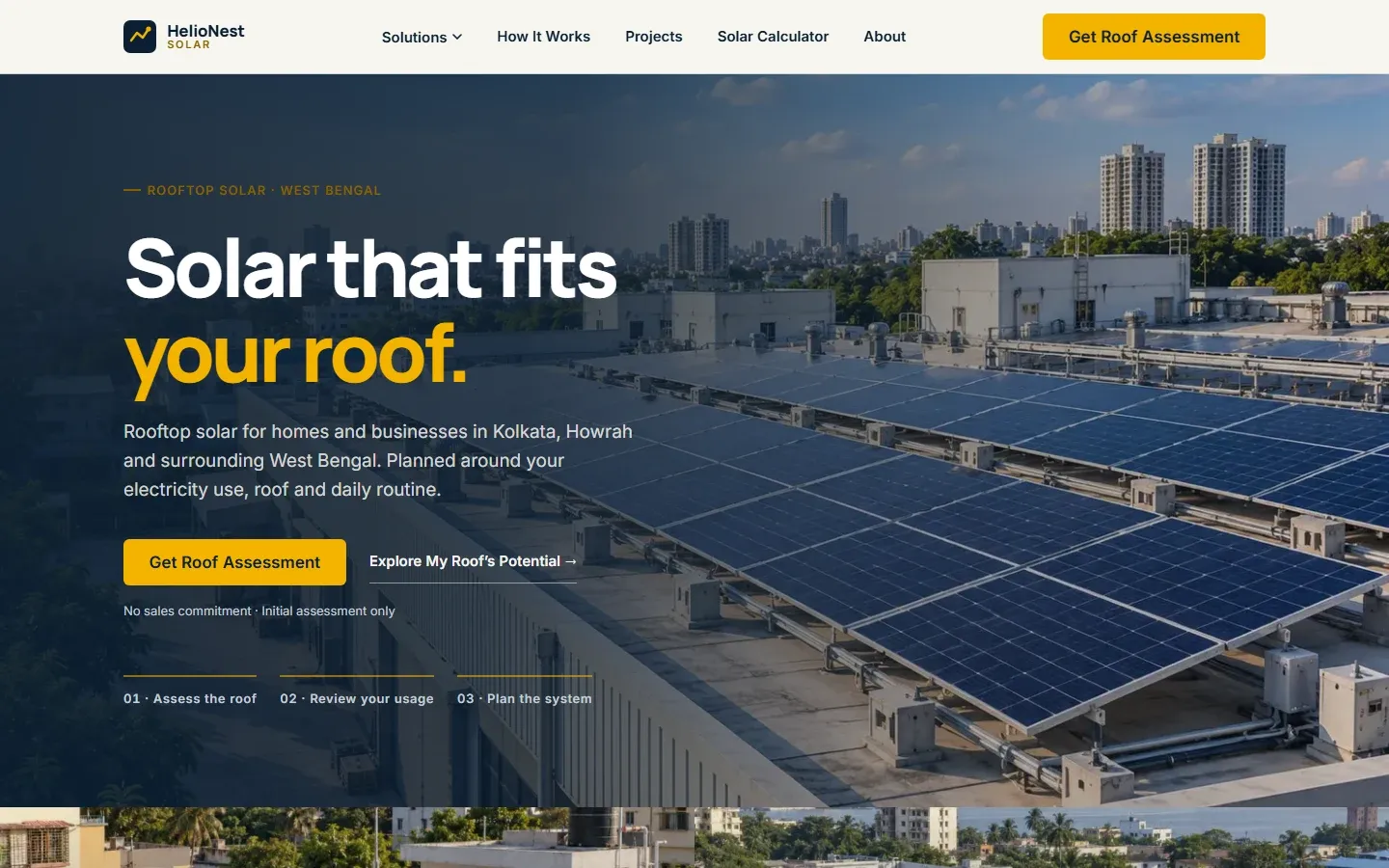
Project context
What this concept needed to establish.
HelioNest is a fictional rooftop-solar concept created for a category where homeowners and businesses often have to make sense of technical specifications, site constraints, policy questions and long-term economics before they are ready to enquire.
Design challenge
The problem shaping the experience.
The experience needed to make a complex, high-consideration service easier to understand without relying on exaggerated savings claims, fabricated proof or the generic green-tech language common across the category.
Design direction
The idea carried through the build.
A structured decision journey, engineering-led visual language, restrained solar-gold accents and interactive assessment tools turn technical information into a clearer path from first question to qualified enquiry.
INSIDE THE WORKING CONCEPT
A useful decision, before an enquiry.
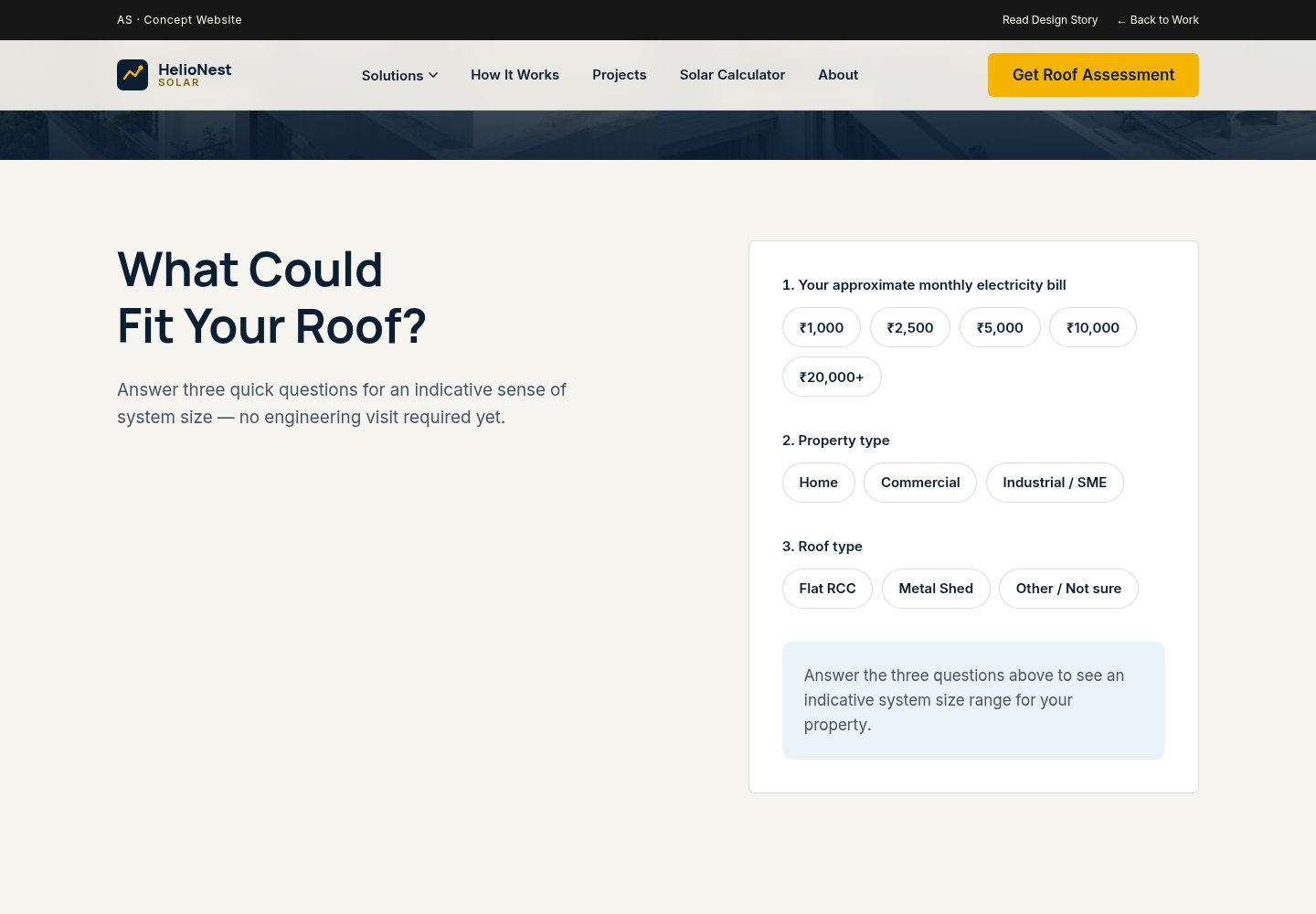
Actual desktop and mobile captures from the HelioNest concept build. The estimator asks about electricity use, property and roof type before offering an indicative range; it is not an engineering assessment.
Open mobile interface capture ↗Key UX and content decisions
Deliberate choices, not template defaults.
- 01
Separated residential and commercial decision paths while keeping the underlying information architecture consistent.
- 02
Built calculators and assessment tools around explicit assumptions rather than presenting unsupported savings or payback claims.
- 03
Used photography, diagrams and responsive content hierarchy to explain the service without turning the interface into a dense technical brochure.
What the work demonstrates
A research-led approach to a technical service business, combining information architecture, interactive decision tools, responsive visual design and production-ready Astro development.
INSPECT THE DECISION PATH
Can a visitor find what they need to decide?
Open the concept on your phone. Find the relevant service or project, check the context provided and follow the enquiry route. This demonstrates interface behavior, not measured customer results.